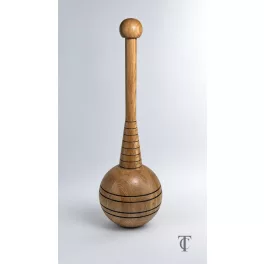
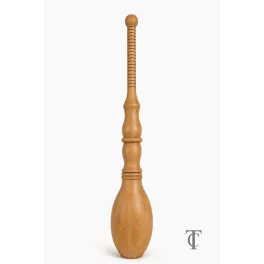
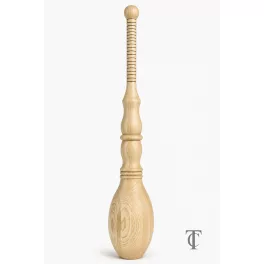
The gada (Sanskrit: गदा gadā, meaning mace) was originally a weapon of Indo-Iranian origin. The first written sources mentioning it date to around 1500–1000 BCE. In Vedic literature, it is mentioned in the Dhanurveda, one of the upavedas, although that text gives no technical description. The Agni Purana and the great epic Mahabharata are among the first texts to describe combat movements with the gada in more detail. Fighting with the gada is called gada-yuddha. Martial arts still practised today, such as Kalaripayattu and Angampora, include mace combat. Over time, the gada gradually evolved from a weapon into a training tool. The Malla Purana, written in the 13th century and recording the rules and training methods of Indian wrestling (malla-yuddha), already mentions this use: wrestlers swung it as a strength exercise during preparation. The gada also holds an important symbolic role in Hinduism. It is best known as an attribute of Vishnu: his gada, Kaumodaki, symbolises cosmic strength, law and justice. It also appears with Hanuman and other deities, generally as a symbol of martial strength and protection.
Filter
Product status
Material
GADA
3Product
13